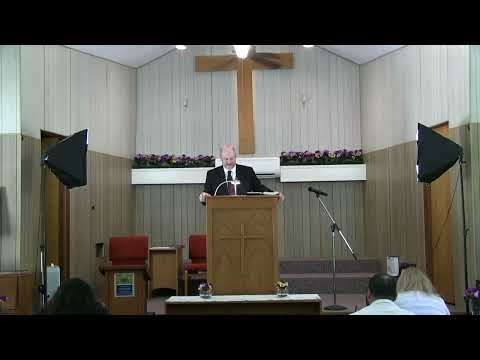
• Video Sermon #kjv #kingjamesbible #biblestudy #bible #scripture #scriptures Pastor Richard Jordan - God Manifest In His Body https://youtu.be/8MXgtEDQPMg?si=jSrus0j8NB9VLu1z
    #timothy #rightlydividingthewordoftruth #christ #apostlepaul #message #paul #jesuschrist #grace #god #gracemessage #bodyofchrist
    Video Sermon #kjv #kingjamesbible #biblestudy #bible #scripture #scriptures Pastor Richard Jordan - God Manifest In His Body https://youtu.be/8MXgtEDQPMg?si=jSrus0j8NB9VLu1z #timothy #rightlydividingthewordoftruth #christ #apostlepaul #message #paul #jesuschrist #grace #god #gracemessage #bodyofchrist
    0 Commenti 0 condivisioni 272 Views
  • Video Sermon #kjv #kingjamesbible #bible #biblestudy #scripture #scriptures Pastor Jim Devney - #Dispensations #2Timothy 2:15 - https://youtu.be/eSTUqpuEu-E?si=BucuTljFSyPH4NiG
    Video Sermon #kjv #kingjamesbible #bible #biblestudy #scripture #scriptures Pastor Jim Devney - #Dispensations #2Timothy 2:15 - https://youtu.be/eSTUqpuEu-E?si=BucuTljFSyPH4NiG
    0 Commenti 0 condivisioni 691 Views
  • Christian, do not fear - keep the faith! For there is laid up for us who finish the course a crown of righteousness (2 Tim. 4:8). Looking forward to receiving this should strengthen us in our daily walk.

    We must never give up. We must fight the good fight. We all eventually will lay aside this earthly tent, and what is mortal will be replaced with what is immortal (2 Cor. 5:4).

    Yes, for now we groan. We wait eagerly for the redemption of our bodies (Rom. 8:23). We look forward in hope to our adoption as sons. We have not yet received the fulness of God’s promises, but not having seen it, we wait eagerly for it (Rom. 8:24-25).

    In the meantime, strive to show yourself a faithful worker, approved by God, rightly handling His word (2 Tim. 2:15). Live as a slave not of sin, but of righteousness (Rom. 6:16-20). Present your bodies a living sacrifice to God, which is true worship (Rom. 12:1). Do not be conformed to this world, but be transformed by the renewing of your mind (Rom. 12:2).

    Because blessed are you when you persevere; for once you are approved you will receive the crown of life which the Lord has promised to those of us who love Him (Jam. 1:12). Amen.

    ——————
    Spurgeon’s Morning and Evening Devotions

    Morning, January 10

    "There is laid up for me a crown of righteousness." 2 Timothy 4:8

    Doubting one! thou hast often said, "I fear I shall never enter heaven." Fear not! all the people of God shall enter there. I love the quaint saying of a dying man, who exclaimed, "I have no fear of going home; I have sent all before me; God's finger is on the latch of my door, and I am ready for Him to enter." "But," said one, "are you not afraid lest you should miss your inheritance?" "Nay," said he, "nay; there is one crown in heaven which the angel Gabriel could not wear, it will fit no head but mine. There is one throne in heaven which Paul the apostle could not fill; it was made for me, and I shall have it." O Christian, what a joyous thought! thy portion is secure; "there remaineth a rest." "But cannot I forfeit it?" No, it is entailed. If I be a child of God I shall not lose it. It is mine as securely as if I were there. Come with me, believer, and let us sit upon the top of Nebo, and view the goodly land, even Canaan. Seest thou that little river of death glistening in the sunlight, and across it dost thou see the pinnacles of the eternal city? Dost thou mark the pleasant country, and all its joyous inhabitants? Know, then, that if thou couldst fly across thou wouldst see written upon one of its many mansions, "This remaineth for such a one; preserved for him only. He shall be caught up to dwell for ever with God." Poor doubting one, see the fair inheritance; it is thine. If thou believest in the Lord Jesus, if thou hast repented of sin, if thou hast been renewed in heart, thou art one of the Lord's people, and there is a place reserved for thee, a crown laid up for thee, a harp specially provided for thee. No one else shall have thy portion, it is reserved in heaven for thee, and thou shalt have it ere long, for there shall be no vacant thrones in glory when all the chosen are gathered in.
    Christian, do not fear - keep the faith! For there is laid up for us who finish the course a crown of righteousness (2 Tim. 4:8). Looking forward to receiving this should strengthen us in our daily walk. We must never give up. We must fight the good fight. We all eventually will lay aside this earthly tent, and what is mortal will be replaced with what is immortal (2 Cor. 5:4). Yes, for now we groan. We wait eagerly for the redemption of our bodies (Rom. 8:23). We look forward in hope to our adoption as sons. We have not yet received the fulness of God’s promises, but not having seen it, we wait eagerly for it (Rom. 8:24-25). In the meantime, strive to show yourself a faithful worker, approved by God, rightly handling His word (2 Tim. 2:15). Live as a slave not of sin, but of righteousness (Rom. 6:16-20). Present your bodies a living sacrifice to God, which is true worship (Rom. 12:1). Do not be conformed to this world, but be transformed by the renewing of your mind (Rom. 12:2). Because blessed are you when you persevere; for once you are approved you will receive the crown of life which the Lord has promised to those of us who love Him (Jam. 1:12). Amen. —————— Spurgeon’s Morning and Evening Devotions Morning, January 10 "There is laid up for me a crown of righteousness." 2 Timothy 4:8 Doubting one! thou hast often said, "I fear I shall never enter heaven." Fear not! all the people of God shall enter there. I love the quaint saying of a dying man, who exclaimed, "I have no fear of going home; I have sent all before me; God's finger is on the latch of my door, and I am ready for Him to enter." "But," said one, "are you not afraid lest you should miss your inheritance?" "Nay," said he, "nay; there is one crown in heaven which the angel Gabriel could not wear, it will fit no head but mine. There is one throne in heaven which Paul the apostle could not fill; it was made for me, and I shall have it." O Christian, what a joyous thought! thy portion is secure; "there remaineth a rest." "But cannot I forfeit it?" No, it is entailed. If I be a child of God I shall not lose it. It is mine as securely as if I were there. Come with me, believer, and let us sit upon the top of Nebo, and view the goodly land, even Canaan. Seest thou that little river of death glistening in the sunlight, and across it dost thou see the pinnacles of the eternal city? Dost thou mark the pleasant country, and all its joyous inhabitants? Know, then, that if thou couldst fly across thou wouldst see written upon one of its many mansions, "This remaineth for such a one; preserved for him only. He shall be caught up to dwell for ever with God." Poor doubting one, see the fair inheritance; it is thine. If thou believest in the Lord Jesus, if thou hast repented of sin, if thou hast been renewed in heart, thou art one of the Lord's people, and there is a place reserved for thee, a crown laid up for thee, a harp specially provided for thee. No one else shall have thy portion, it is reserved in heaven for thee, and thou shalt have it ere long, for there shall be no vacant thrones in glory when all the chosen are gathered in.
    Like
    Love
    2
    0 Commenti 2 condivisioni 2439 Views
  • Islam, Marxism, and lgbt enslaves; Jesus saves from sin! Believe on Jesus!
    “This is a faithful saying and worthy of all acceptance, that Christ Jesus came into the world to save sinners, of whom I am chief.”
    ‭‭I Timothy‬ ‭1‬:‭15‬ ‭NKJV‬‬
    https://bible.com/bible/114/1ti.1.15.NKJV
    Islam, Marxism, and lgbt enslaves; Jesus saves from sin! Believe on Jesus! “This is a faithful saying and worthy of all acceptance, that Christ Jesus came into the world to save sinners, of whom I am chief.” ‭‭I Timothy‬ ‭1‬:‭15‬ ‭NKJV‬‬ https://bible.com/bible/114/1ti.1.15.NKJV
    BIBLE.COM
    I Timothy 1:15 (NKJV) - This is a faithful saying and worth | YouVersion
    This is a faithful saying and worthy of all acceptance, that Christ Jesus came into the world to save sinners, of whom I am chief.
    Like
    2
    0 Commenti 0 condivisioni 1052 Views
  • Christian, do you suffer with physical difficulties? Illness? Injury? Disability? This should come as no surprise - we live in a fallen world, inhabiting corruptible bodies.

    Paul describes this fallen world as follows: “For the anxious longing of the creation waits eagerly for the revealing of the sons of God. For the creation was subjected to futility, not willingly, but because of Him who subjected it, in hope that the creation itself also will be set free from its slavery to corruption into the freedom of the glory of the children of God” (Rom. 8:19-21).

    One day, the world shall be set free from its corruption; until then, it waits and degrades, as do we. As Paul continues, “even we ourselves groan within ourselves, waiting eagerly for our adoption as sons, the redemption of our body” (Rom. 8:23).

    Paul himself suffered with an issue that most believe to be a physical impairment, as Paul describes in 2 Cor. 12 his “thorn in the flesh” that tormented him in order to keep him humble. Timothy suffered “frequent ailments”, and Paul instructed him to drink wine for relief (1 Tim. 5:23). Neither was healed in this life.

    The promise for us, that to which we look forward, for which we wait eagerly, is “our adoption as sons, the redemption of our body” (Rom. 8:23). Let us then when not healed, as did Paul, recognize that in our weakness God is shown to be strong and the power of Christ is able to dwell in us (2 Cor. 12:9). For when we are weak, then we are strong (2 Cor. 12:10).

    ——————
    Spurgeon’s Morning and Evening Devotions

    Evening, December 4

    "Even we ourselves groan within ourselves, waiting for the adoption, to wit, the redemption of our body." Romans 8:23

    This groaning is universal among the saints: to a greater or less extent we all feel it. It is not the groan of murmuring or complaint: it is rather the note of desire than of distress. Having received an earnest, we desire the whole of our portion; we are sighing that our entire manhood, in its trinity of spirit, soul, and body, may be set free from the last vestige of the fall; we long to put off corruption, weakness, and dishonour, and to wrap ourselves in incorruption, in immortality, in glory, in the spiritual body which the Lord Jesus will bestow upon His people. We long for the manifestation of our adoption as the children of God. "We groan," but it is "within ourselves." It is not the hypocrite's groan, by which he would make men believe that he is a saint because he is wretched. Our sighs are sacred things, too hallowed for us to tell abroad. We keep our longings to our Lord alone. Then the apostle says we are "waiting", by which we learn that we are not to be petulant, like Jonah or Elijah, when they said, "Let me die"; nor are we to whimper and sigh for the end of life because we are tired of work, nor wish to escape from our present sufferings till the will of the Lord is done. We are to groan for glorification, but we are to wait patiently for it, knowing that what the Lord appoints is best. Waiting implies being ready. We are to stand at the door expecting the Beloved to open it and take us away to Himself. This "groaning" is a test. You may judge of a man by what he groans after. Some men groan after wealth- they worship Mammon; some groan continually under the troubles of life- they are merely impatient; but the man who sighs after God, who is uneasy till he is made like Christ, that is the blessed man. May God help us to groan for the coming of the Lord, and the resurrection which He will bring to us.
    Christian, do you suffer with physical difficulties? Illness? Injury? Disability? This should come as no surprise - we live in a fallen world, inhabiting corruptible bodies. Paul describes this fallen world as follows: “For the anxious longing of the creation waits eagerly for the revealing of the sons of God. For the creation was subjected to futility, not willingly, but because of Him who subjected it, in hope that the creation itself also will be set free from its slavery to corruption into the freedom of the glory of the children of God” (Rom. 8:19-21). One day, the world shall be set free from its corruption; until then, it waits and degrades, as do we. As Paul continues, “even we ourselves groan within ourselves, waiting eagerly for our adoption as sons, the redemption of our body” (Rom. 8:23). Paul himself suffered with an issue that most believe to be a physical impairment, as Paul describes in 2 Cor. 12 his “thorn in the flesh” that tormented him in order to keep him humble. Timothy suffered “frequent ailments”, and Paul instructed him to drink wine for relief (1 Tim. 5:23). Neither was healed in this life. The promise for us, that to which we look forward, for which we wait eagerly, is “our adoption as sons, the redemption of our body” (Rom. 8:23). Let us then when not healed, as did Paul, recognize that in our weakness God is shown to be strong and the power of Christ is able to dwell in us (2 Cor. 12:9). For when we are weak, then we are strong (2 Cor. 12:10). —————— Spurgeon’s Morning and Evening Devotions Evening, December 4 "Even we ourselves groan within ourselves, waiting for the adoption, to wit, the redemption of our body." Romans 8:23 This groaning is universal among the saints: to a greater or less extent we all feel it. It is not the groan of murmuring or complaint: it is rather the note of desire than of distress. Having received an earnest, we desire the whole of our portion; we are sighing that our entire manhood, in its trinity of spirit, soul, and body, may be set free from the last vestige of the fall; we long to put off corruption, weakness, and dishonour, and to wrap ourselves in incorruption, in immortality, in glory, in the spiritual body which the Lord Jesus will bestow upon His people. We long for the manifestation of our adoption as the children of God. "We groan," but it is "within ourselves." It is not the hypocrite's groan, by which he would make men believe that he is a saint because he is wretched. Our sighs are sacred things, too hallowed for us to tell abroad. We keep our longings to our Lord alone. Then the apostle says we are "waiting", by which we learn that we are not to be petulant, like Jonah or Elijah, when they said, "Let me die"; nor are we to whimper and sigh for the end of life because we are tired of work, nor wish to escape from our present sufferings till the will of the Lord is done. We are to groan for glorification, but we are to wait patiently for it, knowing that what the Lord appoints is best. Waiting implies being ready. We are to stand at the door expecting the Beloved to open it and take us away to Himself. This "groaning" is a test. You may judge of a man by what he groans after. Some men groan after wealth- they worship Mammon; some groan continually under the troubles of life- they are merely impatient; but the man who sighs after God, who is uneasy till he is made like Christ, that is the blessed man. May God help us to groan for the coming of the Lord, and the resurrection which He will bring to us.
    Like
    2
    0 Commenti 1 condivisioni 6321 Views
  • 1 Timothy 2:1-2
    I exhort therefore, that, first of all, supplications, prayers, intercessions, and giving of thanks, be made for all men;
    For kings, and for all that are in authority; that we may lead a quiet and peaceable life in all godliness and honesty.
    #HappyThanksgiving
    1 Timothy 2:1-2 I exhort therefore, that, first of all, supplications, prayers, intercessions, and giving of thanks, be made for all men; For kings, and for all that are in authority; that we may lead a quiet and peaceable life in all godliness and honesty. #HappyThanksgiving
    0 Commenti 0 condivisioni 1732 Views
  • Video Sermon #kjv #kingjamesbible #bible #scriptures #1Timothy 1:12-17 https://youtu.be/br9ToXUrvqU?si=7jOt05fhOd_ssGX_
    Video Sermon #kjv #kingjamesbible #bible #scriptures #1Timothy 1:12-17 https://youtu.be/br9ToXUrvqU?si=7jOt05fhOd_ssGX_
    0 Commenti 0 condivisioni 1297 Views
  • If the "pastor" of your church is a woman, you do not have a pastor nor do you have a church.
    1 Corinthians 14;34-35
    1 Timothy 2:9-11
    #SundaySentiments
    If the "pastor" of your church is a woman, you do not have a pastor nor do you have a church. 1 Corinthians 14;34-35 1 Timothy 2:9-11 #SundaySentiments
    Bullseye
    1
    0 Commenti 0 condivisioni 1282 Views
  • Shared by Talk church!
    I think 2 Timothy 3 explains
    narcissists perfectly | Zach Windahl.
    https://x.com/churchtalkative/status/1988124531773358350?t=uu6JWR-YNqylkgDu65zqIg&s=19
    Shared by Talk church! I think 2 Timothy 3 explains narcissists perfectly | Zach Windahl.👇 https://x.com/churchtalkative/status/1988124531773358350?t=uu6JWR-YNqylkgDu65zqIg&s=19
    Like
    Love
    2
    6 Commenti 2 condivisioni 994 Views
  • 1 Timothy 5:8
    Anyone who does not provide for their relatives, especially their own household, has denied the faith and is worse than an unbeliever.
    1 Timothy 5:8 Anyone who does not provide for their relatives, especially their own household, has denied the faith and is worse than an unbeliever.
    Bullseye
    1
    0 Commenti 0 condivisioni 529 Views
  • Brethren, Paul said it is a trustworthy statement that, if we died with Christ, we surely shall also love with Him (2 Tim. 2:11). But can Paul be trusted to attest his own teaching?

    Yes! Because He is not alone. Peter attests that what Paul has written was according to the wisdom given him [by God] (2 Pet. 3:15). Peter also then gives Paul’s writings place among the Scriptures (2 Pet. 3:16).

    And as we know, “all Scripture is God-breathed” (2 Tim. 3:16), and no Scripture came about by men’s own understanding, but by men carried along by the Holy Spirit spoke that which is from God (2 Pet. 1:20-21).

    Let us take heed then, when Paul said what he writes is trustworthy, to attend to the teaching given and to have faith in its veracity. For this provides assurance, and there is great hope in the assurance that, if we have died with Christ, we shall surely live with Him (2 Tim. 2:11)!

    ——————-
    Spurgeon’s Morning and Evening Devotions

    Morning, October 27

    "It is a faithful saying." 2 Timothy 2:11

    Paul has four of these "faithful sayings." The first occurs in 1 Timothy 1:15, "This is a faithful saying, and worthy of all acceptation, that Christ Jesus came into the world to save sinners." The next is in 1 Timothy 4:6, "Godliness is profitable unto all things, having the promise of the life that now is, and of that which is to come. This is a faithful saying, and worthy of all acceptation." The third is in 2 Timothy 2:12, "It is a faithful saying- If we suffer with Him we shall also reign with Him"; and the fourth is in Titus 3:3, "This is a faithful saying, that they which have believed in God might be careful to maintain good works." We may trace a connection between these faithful sayings. The first one lays the foundation of our eternal salvation in the free grace of God, as shown to us in the mission of the great Redeemer. The next affirms the double blessedness which we obtain through this salvation- the blessings of the upper and nether springs- of time and of eternity. The third shows one of the duties to which the chosen people are called; we are ordained to suffer for Christ with the promise that "if we suffer, we shall also reign with Him." The last sets forth the active form of Christian service, bidding us diligently to maintain good works. Thus we have the root of salvation in free grace; next, the privileges of that salvation in the life which now is, and in that which is to come; and we have also the two great branches of suffering with Christ and serving with Christ, loaded with the fruits of the Spirit. Treasure up these faithful sayings. Let them be the guides of our life, our comfort, and our instruction. The apostle of the Gentiles proved them to be faithful, they are faithful still, not one word shall fall to the ground; they are worthy of all acceptation, let us accept them now, and prove their faithfulness. Let these four faithful sayings be written on the four corners of my house.
    Brethren, Paul said it is a trustworthy statement that, if we died with Christ, we surely shall also love with Him (2 Tim. 2:11). But can Paul be trusted to attest his own teaching? Yes! Because He is not alone. Peter attests that what Paul has written was according to the wisdom given him [by God] (2 Pet. 3:15). Peter also then gives Paul’s writings place among the Scriptures (2 Pet. 3:16). And as we know, “all Scripture is God-breathed” (2 Tim. 3:16), and no Scripture came about by men’s own understanding, but by men carried along by the Holy Spirit spoke that which is from God (2 Pet. 1:20-21). Let us take heed then, when Paul said what he writes is trustworthy, to attend to the teaching given and to have faith in its veracity. For this provides assurance, and there is great hope in the assurance that, if we have died with Christ, we shall surely live with Him (2 Tim. 2:11)! ——————- Spurgeon’s Morning and Evening Devotions Morning, October 27 "It is a faithful saying." 2 Timothy 2:11 Paul has four of these "faithful sayings." The first occurs in 1 Timothy 1:15, "This is a faithful saying, and worthy of all acceptation, that Christ Jesus came into the world to save sinners." The next is in 1 Timothy 4:6, "Godliness is profitable unto all things, having the promise of the life that now is, and of that which is to come. This is a faithful saying, and worthy of all acceptation." The third is in 2 Timothy 2:12, "It is a faithful saying- If we suffer with Him we shall also reign with Him"; and the fourth is in Titus 3:3, "This is a faithful saying, that they which have believed in God might be careful to maintain good works." We may trace a connection between these faithful sayings. The first one lays the foundation of our eternal salvation in the free grace of God, as shown to us in the mission of the great Redeemer. The next affirms the double blessedness which we obtain through this salvation- the blessings of the upper and nether springs- of time and of eternity. The third shows one of the duties to which the chosen people are called; we are ordained to suffer for Christ with the promise that "if we suffer, we shall also reign with Him." The last sets forth the active form of Christian service, bidding us diligently to maintain good works. Thus we have the root of salvation in free grace; next, the privileges of that salvation in the life which now is, and in that which is to come; and we have also the two great branches of suffering with Christ and serving with Christ, loaded with the fruits of the Spirit. Treasure up these faithful sayings. Let them be the guides of our life, our comfort, and our instruction. The apostle of the Gentiles proved them to be faithful, they are faithful still, not one word shall fall to the ground; they are worthy of all acceptation, let us accept them now, and prove their faithfulness. Let these four faithful sayings be written on the four corners of my house.
    Like
    1
    0 Commenti 1 condivisioni 4025 Views
  • Brethren, an unpopular doctrine among many Christian’s is that of election and predestination. Many believe the idea that God would choose those to be saved and leave the rest to condemnation contradicts their view of free will and man’s ability to choose God.

    Popularity does not affirm truth, nor does lack of popularity refute it.

    God’s word is replete with passages describing God’s foreknowledge of all people and events, and His choosing, according to His will and for His good pleasure.

    Why did God choose Israel? Why did Jesus choose His apostles and tell them that they didn’t choose Him (Jn. 15:16)? Why did God choose Paul when Paul wasn’t seeking God but rather to kill Jesus’ followers?

    Because it pleased Him to do so.

    Ephesians chapter one and two make clear that God chooses. Paul details election in Romans 8-11. Jesus Himself said no one could come to Him unless the Father first draws him in the same way that one would draw water from a well. Does the water choose to be drawn up in the bucket?

    Paul writes that “it does not depend on the man who wills” (Rom. 9:16), it is not a choice. Paul also writes, “What then? What Israel is seeking, it has not obtained, but those who were chosen obtained it, and the rest were hardened” (Rom. 11:7).

    While offensive to some, this should be a sobering and humbling realization. We have nothing to offer God. Even our faith is a gift. The only thing we contribute to our salvation is the sin that makes it necessary.

    If you are born anew, it was not of your will, but of God (Jn. 1:13). Be thankful, not boastful. Be humble, not proud. You deserve condemnation as much as anyone else. Your salvation is an unearned and undeserved gift.

    Remember that God has a purpose for you. If you are saved, it is because He first predestined you and then He called you (Rom. 8:30). Therefore, be grateful and sober, and “walk in a manner worthy of the calling with which you have been called, with all humility and gentleness, with patience, showing tolerance for one another in love, being diligent to preserve the unity of the Spirit in the bond of peace” (Eph. 4:1-3).

    ——————-
    Spurgeon’s Morning and Evening Devotions

    Evening, October 11

    "Whom He did predestinate, them He also called." Romans 8:30

    In the second epistle to Timothy, first chapter, and ninth verse, are these words- "Who hath saved us, and called us with an holy calling." Now, here is a touchstone by which we may try our calling. It is "an holy calling, not according to our works, but according to his own purpose and grace." This calling forbids all trust in our own doings, and conducts us to Christ alone for salvation, but it afterwards purges us from dead works to serve the living and true God. As He that hath called you is holy, so must you be holy. If you are living in sin, you are not called, but if you are truly Christ's, you can say, "Nothing pains me so much as sin; I desire to be rid of it; Lord, help me to be holy." Is this the panting of thy heart? Is this the tenor of thy life towards God, and His divine will? Again, in Philippians, 3:13, 14, we are told of "The high calling of God in Christ Jesus." Is then your calling a high calling? Has it ennobled your heart, and set it upon heavenly things? Has it elevated your hopes, your tastes, your desires? Has it upraised the constant tenor of your life, so that you spend it with God and for God? Another test we find in Hebrews 3:1- "Partakers of the heavenly calling." Heavenly calling means a call from heaven. If man alone call thee, thou art uncalled. Is thy calling of God? Is it a call to heaven as well as from heaven? Unless thou art a stranger here, and heaven thy home, thou hast not been called with a heavenly calling; for those who have been so called, declare that they look for a city which hath foundations, whose builder and maker is God, and they themselves are strangers and pilgrims upon the earth. Is thy calling thus holy, high, heavenly? Then, beloved, thou hast been called of God, for such is the calling wherewith God doth call His people.
    Brethren, an unpopular doctrine among many Christian’s is that of election and predestination. Many believe the idea that God would choose those to be saved and leave the rest to condemnation contradicts their view of free will and man’s ability to choose God. Popularity does not affirm truth, nor does lack of popularity refute it. God’s word is replete with passages describing God’s foreknowledge of all people and events, and His choosing, according to His will and for His good pleasure. Why did God choose Israel? Why did Jesus choose His apostles and tell them that they didn’t choose Him (Jn. 15:16)? Why did God choose Paul when Paul wasn’t seeking God but rather to kill Jesus’ followers? Because it pleased Him to do so. Ephesians chapter one and two make clear that God chooses. Paul details election in Romans 8-11. Jesus Himself said no one could come to Him unless the Father first draws him in the same way that one would draw water from a well. Does the water choose to be drawn up in the bucket? Paul writes that “it does not depend on the man who wills” (Rom. 9:16), it is not a choice. Paul also writes, “What then? What Israel is seeking, it has not obtained, but those who were chosen obtained it, and the rest were hardened” (Rom. 11:7). While offensive to some, this should be a sobering and humbling realization. We have nothing to offer God. Even our faith is a gift. The only thing we contribute to our salvation is the sin that makes it necessary. If you are born anew, it was not of your will, but of God (Jn. 1:13). Be thankful, not boastful. Be humble, not proud. You deserve condemnation as much as anyone else. Your salvation is an unearned and undeserved gift. Remember that God has a purpose for you. If you are saved, it is because He first predestined you and then He called you (Rom. 8:30). Therefore, be grateful and sober, and “walk in a manner worthy of the calling with which you have been called, with all humility and gentleness, with patience, showing tolerance for one another in love, being diligent to preserve the unity of the Spirit in the bond of peace” (Eph. 4:1-3). ——————- Spurgeon’s Morning and Evening Devotions Evening, October 11 "Whom He did predestinate, them He also called." Romans 8:30 In the second epistle to Timothy, first chapter, and ninth verse, are these words- "Who hath saved us, and called us with an holy calling." Now, here is a touchstone by which we may try our calling. It is "an holy calling, not according to our works, but according to his own purpose and grace." This calling forbids all trust in our own doings, and conducts us to Christ alone for salvation, but it afterwards purges us from dead works to serve the living and true God. As He that hath called you is holy, so must you be holy. If you are living in sin, you are not called, but if you are truly Christ's, you can say, "Nothing pains me so much as sin; I desire to be rid of it; Lord, help me to be holy." Is this the panting of thy heart? Is this the tenor of thy life towards God, and His divine will? Again, in Philippians, 3:13, 14, we are told of "The high calling of God in Christ Jesus." Is then your calling a high calling? Has it ennobled your heart, and set it upon heavenly things? Has it elevated your hopes, your tastes, your desires? Has it upraised the constant tenor of your life, so that you spend it with God and for God? Another test we find in Hebrews 3:1- "Partakers of the heavenly calling." Heavenly calling means a call from heaven. If man alone call thee, thou art uncalled. Is thy calling of God? Is it a call to heaven as well as from heaven? Unless thou art a stranger here, and heaven thy home, thou hast not been called with a heavenly calling; for those who have been so called, declare that they look for a city which hath foundations, whose builder and maker is God, and they themselves are strangers and pilgrims upon the earth. Is thy calling thus holy, high, heavenly? Then, beloved, thou hast been called of God, for such is the calling wherewith God doth call His people.
    Like
    1
    0 Commenti 1 condivisioni 7690 Views
  • 1 Timothy 6:1
    All who are under the yoke as slaves are to regard their own masters as worthy of all honor so that the name of God and our doctrine will not be slandered.
    #ThursdayThoughts
    1 Timothy 6:1 All who are under the yoke as slaves are to regard their own masters as worthy of all honor so that the name of God and our doctrine will not be slandered. #ThursdayThoughts
    0 Commenti 0 condivisioni 1618 Views
  • 2 Timothy 3:1
    But know this, that in the last days difficult times will come.
    2 Timothy 3:1 But know this, that in the last days difficult times will come.
    Bullseye
    2
    3 Commenti 0 condivisioni 572 Views
  • 2 Timothy 4:18
    The LORD will rescue me from every evil deed, and will save me unto His heavenly kingdom; to Him be the glory forever and ever. Amen.
    2 Timothy 4:18 The LORD will rescue me from every evil deed, and will save me unto His heavenly kingdom; to Him be the glory forever and ever. Amen.
    0 Commenti 0 condivisioni 698 Views
  • 1 Timothy 2:5-6
    For there is one God, and one Mediator between God and men, the Man Christ Jesus;
    Who gave Himself a Ransom for all, to be testified in due time.
    #MondayMeditation
    1 Timothy 2:5-6 For there is one God, and one Mediator between God and men, the Man Christ Jesus; Who gave Himself a Ransom for all, to be testified in due time. #MondayMeditation
    0 Commenti 0 condivisioni 1187 Views
  • Believer, do you suffer with illness? So did Timothy (1 Tim. 5:23). Do you have physical limitations or incapacity? Paul experienced the same (2 Cor. 12:7-10). Some will tell you that you simply need faith, and you will be healed, citing 1 Peter 2:24 - "He Himself bore our sins in His body on the cross, so that we might die to sin and live to righteousness; for by His wounds you were healed."

    But this speaks of spiritual illness. The context dictates, as the very next verse says, "For you were continually straying like sheep, but now you have returned to the Shepherd and Guardian of your souls." In this sense, it is true - God promises healing for every believer.

    The promise of physical healing, however, may not be fulfilled in this mortal life. Paul himself did not experience it. Timothy was not miraculously relieved of his frequent stomach ailments.

    While Jesus did heal a variety of ailments during His earthly ministry, these fulfilled the prophecies of such healing, as Scripture tells us: "This was to fulfill what was spoken through Isaiah the prophet: 'HE HIMSELF TOOK OUR INFIRMITIES AND CARRIED AWAY OUR DISEASES.'" (Mat. 8:17).

    There is a greater purpose at work, one that is often found in infirmity. Job, when afflicted with boils from head to toe, whose wife told him to "curse God and die," instead replied, "shall we indeed accept good from God and not accept adversity?" (Job 2:9-10). While also being chastised by his friends, he responded, "Though He slay me, I will hope in Him" (Job 13:15).

    Paul likewise, though he prayed for his thorn to be removed, having his request denied, proclaimed that he would revel in his weakness that God might be shown to be strong!

    God is glorified in our weakness when we but trust in Him and show that trust through our words and actions.

    In the end, we will all be healed. For our flesh will no longer be subject to corruption. Until then, we live in a fallen world of which illness, injury, and incapacity are part and parcel. Regardless of our circumstances then, let us glorify Him!
    -----------

    Spurgeon's Morning and Evening Devotions

    Evening, August 30

    "Heal me, O Lord, and I shall be healed." Jeremiah 17:14

    "I have seen His ways, and will heal him." Isaiah 57:18

    It is the sole prerogative of God to remove spiritual disease. Natural disease may be instrumentally healed by men, but even then the honour is to be given to God who giveth virtue unto medicine, and bestoweth power unto the human frame to cast off disease. As for spiritual sicknesses, these remain with the great Physician alone; He claims it as His prerogative, "I kill and I make alive, I wound and I heal"; and one of the Lord's choice titles is Jehovah-Rophi, the Lord that healeth thee. "I will heal thee of thy wounds," is a promise which could not come from the lip of man, but only from the mouth of the eternal God. On this account the psalmist cried unto the Lord, "O Lord, heal me, for my bones are sore vexed," and again, "Heal my soul, for I have sinned against thee." For this, also, the godly praise the name of the Lord, saying, "He healeth all our diseases." He who made man can restore man; He who was at first the creator of our nature can new create it. What a transcendent comfort it is that in the person of Jesus "dwelleth all the fulness of the Godhead bodily"! My soul, whatever thy disease may be, this great Physician can heal thee. If He be God, there can be no limit to His power. Come then with the blind eye of darkened understanding, come with the limping foot of wasted energy, come with the maimed hand of weak faith, the fever of an angry temper, or the ague of shivering despondency, come just as thou art, for He who is God can certainly restore thee of thy plague. None shall restrain the healing virtue which proceeds from Jesus our Lord. Legions of devils have been made to own the power of the beloved Physician, and never once has He been baffled. All His patients have been cured in the past and shall be in the future, and thou shalt be one among them, my friend, if thou wilt but rest thyself in Him this night.

    Believer, do you suffer with illness? So did Timothy (1 Tim. 5:23). Do you have physical limitations or incapacity? Paul experienced the same (2 Cor. 12:7-10). Some will tell you that you simply need faith, and you will be healed, citing 1 Peter 2:24 - "He Himself bore our sins in His body on the cross, so that we might die to sin and live to righteousness; for by His wounds you were healed." But this speaks of spiritual illness. The context dictates, as the very next verse says, "For you were continually straying like sheep, but now you have returned to the Shepherd and Guardian of your souls." In this sense, it is true - God promises healing for every believer. The promise of physical healing, however, may not be fulfilled in this mortal life. Paul himself did not experience it. Timothy was not miraculously relieved of his frequent stomach ailments. While Jesus did heal a variety of ailments during His earthly ministry, these fulfilled the prophecies of such healing, as Scripture tells us: "This was to fulfill what was spoken through Isaiah the prophet: 'HE HIMSELF TOOK OUR INFIRMITIES AND CARRIED AWAY OUR DISEASES.'" (Mat. 8:17). There is a greater purpose at work, one that is often found in infirmity. Job, when afflicted with boils from head to toe, whose wife told him to "curse God and die," instead replied, "shall we indeed accept good from God and not accept adversity?" (Job 2:9-10). While also being chastised by his friends, he responded, "Though He slay me, I will hope in Him" (Job 13:15). Paul likewise, though he prayed for his thorn to be removed, having his request denied, proclaimed that he would revel in his weakness that God might be shown to be strong! God is glorified in our weakness when we but trust in Him and show that trust through our words and actions. In the end, we will all be healed. For our flesh will no longer be subject to corruption. Until then, we live in a fallen world of which illness, injury, and incapacity are part and parcel. Regardless of our circumstances then, let us glorify Him! ----------- Spurgeon's Morning and Evening Devotions Evening, August 30 "Heal me, O Lord, and I shall be healed." Jeremiah 17:14 "I have seen His ways, and will heal him." Isaiah 57:18 It is the sole prerogative of God to remove spiritual disease. Natural disease may be instrumentally healed by men, but even then the honour is to be given to God who giveth virtue unto medicine, and bestoweth power unto the human frame to cast off disease. As for spiritual sicknesses, these remain with the great Physician alone; He claims it as His prerogative, "I kill and I make alive, I wound and I heal"; and one of the Lord's choice titles is Jehovah-Rophi, the Lord that healeth thee. "I will heal thee of thy wounds," is a promise which could not come from the lip of man, but only from the mouth of the eternal God. On this account the psalmist cried unto the Lord, "O Lord, heal me, for my bones are sore vexed," and again, "Heal my soul, for I have sinned against thee." For this, also, the godly praise the name of the Lord, saying, "He healeth all our diseases." He who made man can restore man; He who was at first the creator of our nature can new create it. What a transcendent comfort it is that in the person of Jesus "dwelleth all the fulness of the Godhead bodily"! My soul, whatever thy disease may be, this great Physician can heal thee. If He be God, there can be no limit to His power. Come then with the blind eye of darkened understanding, come with the limping foot of wasted energy, come with the maimed hand of weak faith, the fever of an angry temper, or the ague of shivering despondency, come just as thou art, for He who is God can certainly restore thee of thy plague. None shall restrain the healing virtue which proceeds from Jesus our Lord. Legions of devils have been made to own the power of the beloved Physician, and never once has He been baffled. All His patients have been cured in the past and shall be in the future, and thou shalt be one among them, my friend, if thou wilt but rest thyself in Him this night.

    Like
    1
    0 Commenti 1 condivisioni 12610 Views
  • This man is disqualified from pulpit ministry.
    1 Timothy 3:2-7
    https://youtu.be/vwH2mEsk6VE?si=xG_lXyyzlhWvr8_E
    This man is disqualified from pulpit ministry. 1 Timothy 3:2-7 https://youtu.be/vwH2mEsk6VE?si=xG_lXyyzlhWvr8_E
    0 Commenti 0 condivisioni 1059 Views
  • 1 Timothy 1:15
    This is a faithful saying, and worthy of all acceptation, that Christ Jesus came into the world to save sinners; of whom I am chief.
    #SundaySentiments
    1 Timothy 1:15 This is a faithful saying, and worthy of all acceptation, that Christ Jesus came into the world to save sinners; of whom I am chief. #SundaySentiments
    0 Commenti 0 condivisioni 1258 Views
  • Believer, are you suffering through some type of physical ailment? Know that, as mentioned this morning God shows mercy. Though we all eventually get there, not all illness ends in death. Unfortunately, illness is part and parcel of living in a fallen world, and though we may ask, God does not always take it from us; physical healing is not, as many teach, promised nor guaranteed in this life, and failure to receive healing does not imply a lack of faith.

    Timothy, who was like a son to Paul, suffered stomach issues and "frequent ailments." Yet instead of miraculously healing him or telling Timothy to claim His healing, Paul instructed him to stop drinking only water and drink some wine (1 Timothy 5:23).

    Paul himself struggled with an "thorn in his side" (some say spiritual, but there is indication in context and elsewhere that he suffered physically), and though He asked God three times to take it from him, God told Paul that His grace was sufficient. Paul recognized this as God allowing his suffering to keep him humble (2 Cor. 12:7-10). He understood that our continued faith, despite our physical weakness, shows forth God's strength and glory.

    Illness (and even death) can also be the result of sharing in the Lord's supper in "an unworthy manner," forgetting to sit in judgement over ourselves so that we will not face greater judgement (1 Cor. 11:23-32).

    Whatever the case, whatever the illness, whatever the cause, whether healed or not, if we are true to the faith, the end result will be God's glory.

    Will you, like Paul, stand firm in your faith and glorify God in your weakness?
    ------------

    Spurgeon's Morning and Evening Devotions

    Evening, August 17

    "This sickness is not unto death." John 11:4

    From our Lord's words we learn that there is a limit to sickness. Here is an "unto" within which its ultimate end is restrained, and beyond which it cannot go. Lazarus might pass through death, but death was not to be the ultimatum of his sickness. In all sickness, the Lord saith to the waves of pain, "Hitherto shall ye go, but no further." His fixed purpose is not the destruction, but the instruction of His people. Wisdom hangs up the thermometer at the furnace mouth, and regulates the heat.

    1. The limit is encouragingly comprehensive. The God of providence has limited the time, manner, intensity, repetition, and effects of all our sicknesses; each throb is decreed, each sleepless hour predestinated, each relapse ordained, each depression of spirit foreknown, and each sanctifying result eternally purposed. Nothing great or small escapes the ordaining hand of Him who numbers the hairs of our head.

    2. This limit is wisely adjusted to our strength, to the end designed, and to the grace apportioned. Affliction comes not at haphazard- the weight of every stroke of the rod is accurately measured. He who made no mistakes in balancing the clouds and meting out the heavens, commits no errors in measuring out the ingredients which compose the medicine of souls. We cannot suffer too much nor be relieved too late.

    3. The limit is tenderly appointed. The knife of the heavenly Surgeon never cuts deeper than is absolutely necessary. "He doth not afflict willingly, nor grieve the children of men." A mother's heart cries, "Spare my child"; but no mother is more compassionate than our gracious God. When we consider how hard-mouthed we are, it is a wonder that we are not driven with a sharper bit. The thought is full of consolation, that He who has fixed the bounds of our habitation, has also fixed the bounds of our tribulation.
    Believer, are you suffering through some type of physical ailment? Know that, as mentioned this morning God shows mercy. Though we all eventually get there, not all illness ends in death. Unfortunately, illness is part and parcel of living in a fallen world, and though we may ask, God does not always take it from us; physical healing is not, as many teach, promised nor guaranteed in this life, and failure to receive healing does not imply a lack of faith. Timothy, who was like a son to Paul, suffered stomach issues and "frequent ailments." Yet instead of miraculously healing him or telling Timothy to claim His healing, Paul instructed him to stop drinking only water and drink some wine (1 Timothy 5:23). Paul himself struggled with an "thorn in his side" (some say spiritual, but there is indication in context and elsewhere that he suffered physically), and though He asked God three times to take it from him, God told Paul that His grace was sufficient. Paul recognized this as God allowing his suffering to keep him humble (2 Cor. 12:7-10). He understood that our continued faith, despite our physical weakness, shows forth God's strength and glory. Illness (and even death) can also be the result of sharing in the Lord's supper in "an unworthy manner," forgetting to sit in judgement over ourselves so that we will not face greater judgement (1 Cor. 11:23-32). Whatever the case, whatever the illness, whatever the cause, whether healed or not, if we are true to the faith, the end result will be God's glory. Will you, like Paul, stand firm in your faith and glorify God in your weakness? ------------ Spurgeon's Morning and Evening Devotions Evening, August 17 "This sickness is not unto death." John 11:4 From our Lord's words we learn that there is a limit to sickness. Here is an "unto" within which its ultimate end is restrained, and beyond which it cannot go. Lazarus might pass through death, but death was not to be the ultimatum of his sickness. In all sickness, the Lord saith to the waves of pain, "Hitherto shall ye go, but no further." His fixed purpose is not the destruction, but the instruction of His people. Wisdom hangs up the thermometer at the furnace mouth, and regulates the heat. 1. The limit is encouragingly comprehensive. The God of providence has limited the time, manner, intensity, repetition, and effects of all our sicknesses; each throb is decreed, each sleepless hour predestinated, each relapse ordained, each depression of spirit foreknown, and each sanctifying result eternally purposed. Nothing great or small escapes the ordaining hand of Him who numbers the hairs of our head. 2. This limit is wisely adjusted to our strength, to the end designed, and to the grace apportioned. Affliction comes not at haphazard- the weight of every stroke of the rod is accurately measured. He who made no mistakes in balancing the clouds and meting out the heavens, commits no errors in measuring out the ingredients which compose the medicine of souls. We cannot suffer too much nor be relieved too late. 3. The limit is tenderly appointed. The knife of the heavenly Surgeon never cuts deeper than is absolutely necessary. "He doth not afflict willingly, nor grieve the children of men." A mother's heart cries, "Spare my child"; but no mother is more compassionate than our gracious God. When we consider how hard-mouthed we are, it is a wonder that we are not driven with a sharper bit. The thought is full of consolation, that He who has fixed the bounds of our habitation, has also fixed the bounds of our tribulation.
    Like
    1
    1 Commenti 1 condivisioni 9374 Views
  • 1 Timothy 3:2, 7 (KJV)
    A bishop then must be blameless, the husband of one wife, vigilant, sober, of good behavior, given to hospitality, apt to teach...
    Moreover he must have a good report of them which are without; lest he fall into reproach and the snare of the devil.

    A pastor must be BLAMELESS. What does that mean in this context? There should never be an accusation against a pastor that can be proven or that he confesses. The most egregious of accusations is the one where he has committed sexual sin outside of his marriage. We have watched, over the past few months, how pastor after pastor has had to leave his pulpit because he sinned against his wife. We watched some of the most gifted and doctrinally sound men of this era confess that they were unfaithful in their marriages. Once they have committed such a heinous act, they are NO LONGER BLAMELESS, thereby disqualifying themselves from pulpit ministry FOREVER. It matters not how much they cry and beg for forgiveness. If they are sincere in their apologies, they will submit themselves to church discipline and sit down somewhere under some doctrinally sound teaching and accept the fact that they no longer belong in the pulpit. If they don't do that, they are arrogant and disobedient to God's Word. It doesn't matter who likes them or how much someone thinks they are such a good preacher. This doesn't mean they can't repent and end up in heaven, but they cannot go back and undo their sin, which means they are forever disqualified from the pulpit.
    1 Timothy 3:2, 7 (KJV) A bishop then must be blameless, the husband of one wife, vigilant, sober, of good behavior, given to hospitality, apt to teach... Moreover he must have a good report of them which are without; lest he fall into reproach and the snare of the devil. A pastor must be BLAMELESS. What does that mean in this context? There should never be an accusation against a pastor that can be proven or that he confesses. The most egregious of accusations is the one where he has committed sexual sin outside of his marriage. We have watched, over the past few months, how pastor after pastor has had to leave his pulpit because he sinned against his wife. We watched some of the most gifted and doctrinally sound men of this era confess that they were unfaithful in their marriages. Once they have committed such a heinous act, they are NO LONGER BLAMELESS, thereby disqualifying themselves from pulpit ministry FOREVER. It matters not how much they cry and beg for forgiveness. If they are sincere in their apologies, they will submit themselves to church discipline and sit down somewhere under some doctrinally sound teaching and accept the fact that they no longer belong in the pulpit. If they don't do that, they are arrogant and disobedient to God's Word. It doesn't matter who likes them or how much someone thinks they are such a good preacher. This doesn't mean they can't repent and end up in heaven, but they cannot go back and undo their sin, which means they are forever disqualified from the pulpit.
    0 Commenti 0 condivisioni 7362 Views
  • The Baylor Trombone Ensemble performed the works of W.A. Mozart, Madeline Lee, Noah Davies, Martin O'Donnell, Giovanni Gabrieli, Anthony Barfield, Derek Bourgeois, and John Williams, and featured SSG Austin Westjohn, SSG Conor Wilson, and Dr. Steve Wilson at The U.S. Army Band 2025 American Trombone Workshop; Brent Phillips, Dr. Timothy Owner & Rebekah Lambert, conducting. #BaylorMusic #Baylor #SicEm #TromboneChoir #Trombone #ATW2025 #ATW #Music
    The Baylor Trombone Ensemble performed the works of W.A. Mozart, Madeline Lee, Noah Davies, Martin O'Donnell, Giovanni Gabrieli, Anthony Barfield, Derek Bourgeois, and John Williams, and featured SSG Austin Westjohn, SSG Conor Wilson, and Dr. Steve Wilson at The U.S. Army Band 2025 American Trombone Workshop; Brent Phillips, Dr. Timothy Owner & Rebekah Lambert, conducting. #BaylorMusic #Baylor #SicEm #TromboneChoir #Trombone #ATW2025 #ATW #Music
    0 Commenti 0 condivisioni 9958 Views
  • Brent Phillips performed the works of Jean-Michel Defaye, Ferdinand David, Stjepan Šulek, and Johannes Brahms for a recital featuring guest trombonist Timothy Owner at The U.S. Army Band 2025 American Trombone Workshop. #BaylorMusic #Baylor #SicEm #Trombone #ATW2025 #ATW #Music
    Brent Phillips performed the works of Jean-Michel Defaye, Ferdinand David, Stjepan Šulek, and Johannes Brahms for a recital featuring guest trombonist Timothy Owner at The U.S. Army Band 2025 American Trombone Workshop. #BaylorMusic #Baylor #SicEm #Trombone #ATW2025 #ATW #Music
    0 Commenti 0 condivisioni 8638 Views
  • Every disciple needs three types of relationships in his life. He needs a 'Paul' who can mentor him and challenge him. He needs a 'Barnabas' who can come along side and encourage him. And he needs a 'Timothy,' someone that he can pour his life into.
    ~Howard G. Hendricks
    #MondayMeditation
    Every disciple needs three types of relationships in his life. He needs a 'Paul' who can mentor him and challenge him. He needs a 'Barnabas' who can come along side and encourage him. And he needs a 'Timothy,' someone that he can pour his life into. ~Howard G. Hendricks #MondayMeditation
    0 Commenti 0 condivisioni 1708 Views
Pagine in Evidenza